Monday, May 23

Provinces of Sri Lanka

Uva Province 

Area - 8500  km2 

Capital city - Badulla

Largest city - Badulla

Districts - Badulla, Monaragala

Cities or towns in Uva province :

Badulla district - 

Badulla, Bandarawela, Haputale, Mahiyanganaya, Diyathalawa, Hali-ala, Ella, Haldumulla, Beragala, Welimada, Passara, Kandakatiya, Meegahakiwla, Lunugala, Kurmarapitiya, Tennapanguwa

Monaragala district - 

Monaragala, Bibile, Buttala, Wallawaya, Kataragama, Siyabalanduwa, Athimale, Madagama, Thanamalwila, Badalkumura, Madulla, Okkampitiya


Western Province 

Area - 3684  km2 

Capital city - Colombo

Largest city - Colombo

Districts - Colombo, Gampaha, Kalutara

Cities or towns in Western province :

Colombo district - 

Colombo, Kaduwela, Dehiwala-Mount lavinia, Maharagama, Moratuva, Kasbawe, Sri Jayawardanapura Kotte, Boralasgamuwa, Kolonnawa, Avissawella 

Gampaha district - 

Nittabuwa, Biyagama, Divulapitiya, Kiridiwela, Gampaha, Ja-ela, Katana, Kelaniya, Mahara, Minuwangoda, Mirigama, Negambo, Wattala

Kalutara district -

Agalawatta, Bandaragama, Beruwala, Bulathsinhala, Dodangoda, Horana, Ingiriya, Kelaniya, Madurawela, Matugama, Millaniya, Baduraliya, Panadura, Walallavita

Sunday, May 15

Provinces of Sri Lanka

North Western Province 

Area - 7888  km2 

Capital city - Kurunegala

Largest city - Kurunegala

Districts - Kurunegala, Puttalam

Cities or towns in North Western province :

Kurunegala district - 

Kurunegala, Kuliyapitiya, Narammala, Wariyapola, Nikewaratiya, Pannala, Galgamuwa, Polgahawela, Maho, Alawwa, Ibbagamuwa, Giriulla, Hiripitiya, Dandagamuwa, Dabadeniya, Malsiripura, Hettipola, Paduwasnuwara, Pothuhara, Yapahuwa, Mawathagama, Rideegama, Bingiriya

Puttalam district - 

Puttalam, Chilaw, Anamaduwa, Dankotuwa, Kalpitiya, Madampe, Marawila, Naththandiya, Thillayadi, Wennappuwa, Katuneriya, Nainamadama, Palavi


Sabaragamuwa Province 

Area - 4968  km2 

Capital city - Ratnapura

Largest city - Ratnapura

Districts - Kegalle, Ratnapura

Cities or towns in Sabaragamuwa province :

Kegalle district - 

Kegalle, Ambepussa, Aranayaka, Bulathkohupitiya, Dehiovita, Daraniyagala, Galigamuwa, Hemmathagama, Karawanalla, Kithulgala, Kotiyakumbura, Mawanalla, Rambukkana, Ruwanwalla, Warakapola, Yatiyanthota, Ganthuna

Ratnapura district - 

Ratnapura, Balangoda, Ambilipiya, Ehaliyagoda, Pelmadulla, Kuruwita, Imbulpe, Godakawela, Kahawatta, Rakwana, Nivithigala, Ayagama, Kalawana, Kolonna, Panamure, Opanayaka 


Southern Province 

Area - 5544  km2 

Capital city - Galle

Largest city - Galle

Districts - Galle, Matara, Hambanthota

Cities or towns in Southern province :

Galle district - 

Galle, Karapitiya, Unawatuna, Ambalangoda, Hikkaduwa, Ahangama, Ahungalla, Baddegama, Balapitiya, Batapola, Bentota, Boossa, Elpitiya, Habaraduwa, Hiniduma, Imaduwa, Karandeniya, Koggala, Kosgoda, Mapalagama, Nagoda, Neluwa, Pitigama, Rathgama, Thawalama, Udagama, Waduraba

Matara district - 

Matara, Aparekka, Weligama, Akurassa, Thihagoda, Mirissa, Deniyaya, Pitabaddara, Kamburupitiya, Thilijjawila, Malimbada, Welipitiya, Denipitiya, Morawaka, Devinuwara, Hakmana, Gandara

Hambanthota district -

Hambanthota, Thangalla, Beliaththa, Thissamaharama, Middeniya, Ambalanthota, Agunakolapalassa, Walasmulla, Weerakatiya

Provinces of Sri Lanka


Central Province 

Area - 5674  km2 

Capital city - Kandy

Largest city - Kandy

Districts - Kandy, Matale, Nuwara Eliya

Cities or towns in Central province:

Kandy district -

Major cities : Kandy, Gampola, Nawalapitiya, Kadugannawa, Wattegama, Theldiniya

    suburbs of Kandy city : Peradeniya, Katugasthota, Pallekale

other towns : Akurana, Alawathugoda, Ambetanna, Daskara, Daulagala, Galagedara, Galhinna, Gelioya, Hanguranketha, Hapugasthalawa, Kadugannawa, Katugasthota, Kundasale, Madawala, Manikdiwela, Pilimatalawa, Pussallawa, Thalathuoya, Ulapane, Watadeniya, Welamboda, Weligalla, Ududumbara

Matale district -

Matale, Dambulla, Galewela, Naula, Pallepola, Rattota, Ukuwela

Nuwara Eliya district - 

Nuwara Eliya, Haton, Talawakale, Ambewela, Hapugastalawa, Agarapatana, Bogawantalawa, Dayagama, Ginigathhena, Maskeliya, Norton Bridge, Watawala, Ramboda, Rikillagaskada, Walapane, Nanu Oya, Pattipola


Eastern Province 

Area - 9996  km2 

Capital city - Trincomalee

Largest city - Kalmunai

Districts - Ampara, Batticaloa, Trincomalee

Cities or towns in Eastern province :

    Ampara district - 

Kalmunai, Ampara, Akkaraipattu, Damana, Maha Oya, Dehiattakandiya, Potuvil, Uhana, Sammanthurai, Lahugala, Sainthamaruthu, Thirukkovil

    Batticaloa district - 

Batticaloa, Eravur, Kattankudy, Pasikuda, Chenkalady, Valachchenei, Vakarai, Oddamavadi

    Trincomalee district - 

Kinniya, Trincomalee, Kantale, Gomarankadawala, Kuchchaweli, Morawewa, Muttur, Siripura, Seruvila, Verugal


North Central Province 

Area - 10 472  km2 

Capital city - Anuradhapura

Largest city - Anuradhapura

Districts - Anuradhapura, Polonnaruwa

Cities or towns in North Central province :

Anuradhapura district - 

Anuradhapura, Kakirawa, Tabuttegama, Galnewa, Madawachchiya, Bulnewa, Eppawala, Galenbidunuwewa, Ganewalpola, Habarana, Horowpotana, Kahatagasdigiliya, Kebithigollawe, Konwewa, Konapathirawa, Madatugama, Mahailuppallama, Maradankadawala, Mihintale, Nochchiyagama, Padawiya, Palugaswewa, Rambewa, Seeppukulama, Thalawa, Thirappane

Polonnaruwa district - 

Polonnaruwa, Madirigiriya, Bakamuna, Higurakgoda, Jayanthipura, Kaduruwela, Minneriya, Aralaganwila, Giritale, Elahara, Galamuna, Lankapura, Siripura, Dibulagala, Manampitiya, Thabalawa, Pulastigama, Sungavila


Nothern Province 

Area - 8884  km2 

Capital city - Jaffna

Largest city - Vavuniya

Districts - Jaffna, Kilinochchi, Mannar, Mullaitivu, Vavuniya

Cities or towns in Nothern province :

Jaffna district - 

Jaffna, Kuyts, Velanai, Karainagar, Nallur, Chavakachcheri, Point Pedro, Karavedy, Kopay, Uduvil

Kilinochchi district - 

Kilinochchi, Pallai, Kandavalai, Poonakary

Mannar district -

Madhu, Mannar, Adampan, Chilawathurei

Mullaitivu district -

Mullaitivu, Oddusudan, Puthukuduiruppu, Ehatugaswewa

Vavuniya district -

Vavuniya, Nadunkeni, Cheddikulum


Friday, December 31

Thursday, November 17

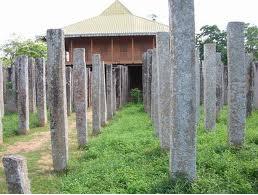
King Devanampiyatissa built chapter house for monk in "mahamevna". Then king Dutugemunu (161 - 137 BC) built it again with nine stairs and cover it by copper tiles. There was hundred gabled houses in each stair. End of the rainy season monks were get together at here.

In reign of king Saddhatissa (137 - 119 BC) Lovamahapaya destroyed by a fire. Then it built with seven stairs. And also it rebuilt again by king Sirinaga (246 -247 AD). He built it with five stairs. After that king Kithsirimevan (301 - 328 AD) also reconstruction it. King Parakramabahu in 12th century reform the "Lovamahapaya" at last.

Nowadays there are only 1600 stone post remain from the building.
In the chronicle of Sri Lanka tells that king Davanampiyatissa built a pile that says ''a grandson of mine build a stupa in this place''. King Dutugamunu saw this and built a stupa at there. In that place there was a goddess name "Swarnamali". Becuase of that this stupa called Ruwanwalisaya.

Ruwanwalisaya is one of the world's tallest stupa and 300 ft (92 m) height and 950 ft (292 m) circumference. It's also called, "Mahathupa, Swarnamaili Chaitya and Rathnamali Dagabe.

Samadhi Buddha Statue

This statue is at Mahamewna park in Anuradhapura. It was build in during 3rd and 4th centuries. The statue sits in Veerasana method and shows Dyana mudra. Samadhi Buddha statue was carved by granite. It's 7 feet and 9 inches in height.

It is said that when you look at the face of the statue from three sides they show 3 different features. Looking at the profile of the face from left and right they show a slight sadness and a slightly smiling face on the other. Looking from the front, the face shows neutral features.

Wasgamuwa National Park

Wasgamuwa is well known its abundant wildlife population, wilderness setting and home of several interesting ancient sites. Wasgamuwa is distinguished from other parks by having a full complement of predators of which bears are particularly noteworthy. Ecological research undertaken in the park suggests that the density of bears in Wasgamuwa is probably higher than anywhere else in Sri Lanka. The name Wasgamuwa may also derive from an ancient meaning as a gathering place for bears. Part of Wasgamuwa was declared a Strict Nature Reserve in 1938 and additional areas added to become Wasgamuwa National Park on 07 th August 1984. The park covers almost 37,062.9 hectares of which most is wilderness areas with no visitation.


Tuesday, October 25

British Governors of Sri Lanka (1798 - 1948)

Between 1796 and 1948, Sri Lanka was a British crown colony.The king of England was the head of state, in practice his or her functions were exercised in the colony by the colonial Governor, who acted on instructions from the British government in London.

01.  Federick North
Date of Birth :- 7 February 1766
Death :- 14 October 1827
Period of service :- 1798 - 1805
British Monarch :- George III 

The first governor of Sri Lanka. 

02.  Sir Thomas Metland
Date of Birth :- 1759
Death :- 1824
Period of service :- 1805 - 1811
British Monarch :- George III 

03.  Sir Robert Brownrigg
Date of Birth :- 1759
Death :- 1833
Period of service :- 1812 - 1820
British Monarch :- George III

04.  Sir Edward Paget
Date of Birth :- 3rd November 1775
Death :- 13th May 1849
Period of service :- 1822 - 1823
British Monarch :- George IV

05.  Sir Edward Barnes
Date of Birth :- 1776
Death :- 19th March 1838
Period of service :- 1823 - 1831
British Monarch :- George IV, William IV

06.  Sir Robert Wilmot-Horton
Date of Birth :- 21 December 1784
Death :- 31 May 1841
Period of service :- 1831 - 1837
British Monarch :- William IV, Queen Victoria

07.  James Alexander Stewart-Mackenzie
Date of Birth :- 23 September 1784
Death :- 24 September 1843
Period of service :- 1837 - 1841
British Monarch :- Queen Victoria

08.  Sir Colin Campbell
Date of Birth :- 1776
Death :- 1847
Period of service :- 1841 - 1847
British Monarch :- Queen Victoria

09.  The Viscount Torrington
Date of Birth :- 9 September 1812
Death :- 27 April 1884
Period of service :- 1847 - 1850
British Monarch :- Queen Victoria

10.  Sir George William Anderson
Date of Birth :- 1791
Death :- 1857
Period of service :- 1850 -1855
British Monarch :- Queen Victoria


11.  Sir Henry George Ward
Date of Birth :- 1797
Death :- 1864
Period of service :- 1855 -1860
British Monarch :- Queen Victoria


12.  Charles Justin MacCarthy
Date of Birth :- 1811
Death :- 1864
Period of service :- 1860 -1863
British Monarch :- Queen Victoria

13.  Hercules George Robert Robinson
Date of Birth :- 19 December 1824
Death :- 28 October 1897
Period of service :- 1865 -1872
British Monarch :- Queen Victoria

14.  Sir William Henry Gregory
Date of Birth :- 13 July 1816
Death :- 6 March 1892
Period of service :- 1872 -1877
British Monarch :- Queen Victoria

15.  Sir James Robert Longden
Date of Birth :- 1827
Death :- 6 March 1891
Period of service :- 1877 -1883
British Monarch :- Queen Victoria

16.  Arthur Charles Hamilton-Gordon
Date of Birth :- 26 November 1829
Death :- 30 January 1912
Period of service :- 1883 - 1890
British Monarch :- Queen Victoria

17.  Sir Arthur Elibank Havelock
Date of Birth :- 21 February 1844
Death :- 25 June 1908
Period of service :- 1890 - 1895
British Monarch :- Queen Victoria

18.  Sir Joseph West Ridgeway
Date of Birth :- 16 May 1844
Death :- 16 April 1930
Period of service :- 1895 - 1903
British Monarch :- Queen Victoria

19.  Sir Henry Arthur Blake
Date of Birth :- 8 January 1840
Death :- 23 February 1918
Period of service :- 1903 - 1907
British Monarch :-  Edward VII

20.  Sir Henry Edward McCallum
Date of Birth :- 28 October 1852
Death :- 24 November 1919
Period of service :- 1907 -1913
British Monarch :- Edward VII

21.  Robert Chalmers
Date of Birth :- 18 August 1858
Death :- 17 November 1938
Period of service :- 1913 - 1916
British Monarch :- George V

22.  Sir William Henry Manning
Date of Birth :- 19 July 1863
Death :- 1 January 1932
Period of service :- 1918 - 1925
British Monarch :- George V

23.  Sir Hugh Charles Clifford
Date of Birth :- 5 March 1866
Death :- 18 December 1941
Period of service :- 1925 - 1927
British Monarch :- George V

24.  Sir Herbert James Stanley
Date of Birth :- 25 July 1872
Death :- 5 June 1955
Period of service :- 1928 - 1931
British Monarch :- George V

25.  Sir Graeme Thomson
Date of Birth :- 1875
Death :- 1933
Period of service :- 1931 - 1933
British Monarch :- George V

26.  Sir Reginald Edward Stubbs
Date of Birth :- 13 October 1876
Death :- 7 December 1947
Period of service :- 1933 - 1937
British Monarch :- George V / Edward VIII / George VI

27.  Sir Andrew Caldecott
Date of Birth :- 26 October 1884
Death :- 14 July 1951
Period of service :- 1937 - 1944
British Monarch :- George VI

28.  Sir Henry Monck-Mason Moore
Date of Birth :- 1887
Death :- 1964
Period of service :- 1944 - 1948
British Monarch :- George VI

He was the first governor of Independent Sri lanka. (1948 - 1949 )


Monday, July 20


Sri Lanka is wonderful country. Around the country there is sandy beach. Then low country and up country. Plains and mountains. You can reach different climate zone in few hours. Colombo has normal, hot climate. Anuradhapura is in dry zone. Hambantota is also has hot and dry climate.But Kandy has cool and soft climate. And Nuwara Eliya is coolest place in country. Englishmen said ''little England'' to Nuwara Eliya. 

Sri Lanka has rain forest like Sinharaja. Yala is a forest and sanctuary in dry zone. World's end  is in upcountry, Nuwara Eliya. There are rivers and waterfalls, modern cities and ancient cities. There are religious places of different religions. Such as Buddhist temples, Christian churches, Islamic churches and Hindu kovils. 
Image result for sri lankaImage result for sri lanka
Image result for sri lanka
Image result for sri lankaImage result for sri lanka

Sunday, March 6

Districts map of Sri Lanka 


  1. Ampara
  2. Anuradhapura
  3. Badulla
  4. Batticaloa
  5. Colombo
  6. Galle
  7. Gampaha
  8. Hambantota
  9. Jaffna
  10. Kalutara
  11. Kandy
  12. Kegalle
  13. Kilinochchi
  14. Kurunegala
  15. Mannar
  16. Matale
  17. Matara
  18. Moneragala
  19. Mullaitivu
  20. Nuwara Eliya
  21. Polonnaruwa
  22. Puttalam
  23. Ratnapura
  24. Trincomalee
  25. Vavuniya


Thursday, February 17

Sigiriya Rock Fortress

Sigiriya (Lion's rock) is an ancient rock fortress and castle/palace ruin situated in the central Matale District of Sri lanka, surrounded by the remains of an extensive network of gardens, reservoirs, and other structures. It is a popular tourist destination, also known for its ancient paintings ( frescos). The Sigiraya was built during the reign of King Kasyapa I(AC 477 – 495), and it is one of the seven World heritage sites of Sri lanka.

In 477 A.D, prince Kasyapa seized the throne from King Dhatusena, following a coup assisted by Migara, the king’snephew and army commander. Kasyapa, the king’s son by a non-royal consort, usurped the rightful heir, Moggallana, who fled to South India. Fearing an attack from Moggallana, Kasyapa moved the capital and his residence from the traditional capital of Anuradhapura to the more secure Sigiriya. During King Kasyapa’s reign from 477 to 495 A.D, Sigiriya was developed into a complex city and fortress. Most of the elaborate constructions on the rock summit and around it, including defensive structures, palaces and gardens, date back to this period.
Kasyapa was defeated in 495 A.D by Moggallana, who moved the capital again to Anuradhapura. Sigiriya was then turned back into a Buddhist monastery, which lasted until the thirteenth or fourteenth century. After this period, no records are found on Sigirya until the sixteenth and seventeenth centuries, when it was used as an outpost of the Kingdom of Kandy. When the kingdom ended, it was abandoned again.

Mirror Wall
Originally this wall was so well polished that the king could see himself whilst he walked alongside it. Make of a kind of porcelain, the wall is now partially covered with verses scribbled by visitors to the rock. Well preserved, the mirror wall has verses dating from the 8th century. People of all types wrote on the wall, on varying subjects such as love, irony, and experiences of all sorts. Further writing on the mirror wall has now been banned.


Frescos

The paintings would have covered most of the western face of the rock, covering an area 140m long and 40m high. There are references in the graffiti to 500 ladies in these paintings. However, many more are lost forever, having been wiped out when the Palace once more became a Monastery so that they would not disturb meditation. Some more frescos different from the popular collection can be seen elsewhere on the rock surface, for example on the surface of the location called the "Cobra Hood Cave". 


It is a tale of treachery and deceit, love and hate, triumph and disaster that has fascinated people down the ages. It is also a tale of craftsmanship and sensuous art, the legacy of which still holds people in awe, more than 15 centuries later.

Many are familiar with the Kasyapan period (477 - 495 AC), when King Kasyapa, after murdering his father King Dhatusena made his home at Sigiriya, creating a different image of this forbidding rock outcrop, starting with a passage leading through the lion's paws and encompassing the lion staircase, the mirror wall, the beautiful apsaras, the water gardens, moated palaces, boulder gardens, terrace gardens at all.

Sigiriya, in addition to being a World Heritage Site, is also one of the very few large secular sites with an unbroken history from 5,000 BC to contemporary periods. It depicts a "microcosm" of the cultural and technological phases of Sri Lanka.


It's history :


Period 1 : Prehistory - prehistoric humans are believed to have lived at Sigiriya between 10,000 and 20,000 years ago.

Period 2 : Proto - history, between 1,000 and 300 BC, when village settlements began along with irrigation and the production and use of iron.

Period 3 : Early monastic, from about the 3rd to 1st century BC marking the establishment of early Buddhist monks' settlements around rock-shelter residences.

Period 4 : Pre-Kasyapa between the 1st and 5th centuries AC. Development of large - scale iron production and construction of fortified Mapalagala complex, with 'cyclopean' walls and terraces, south of Sigiriya rock.

Period 5 : Kasyapa I from 477 - 495 AC.

Period 6 & 7 : Later monastic A & B from 6th to 10th century, with the setting up of a new Buddhist monastery in the western sector and the Boulder Garden area in the early part.

Period 8 : Plonnaruwa Period - From 11th to 13th century, rise of Polonnaruwa and decline of monastery construction at Sigiriya.

Period 9 : Abandonment from the late 13th to the 17th century, with rural settlements surviving but no urban and monastic activity.

Period 10 : Sigiriya appears to have been an outer province of the Kandyan kingfom.

Period 11 : Antiquarian interest when in the 19th century Sigiriya seems to have "recovered".

Period 12 : Modern recovery when in 1894, archaeological investigation, restoration and conservation by the Archaeological Department begins.